
The Hidden Gem of the French Basque Country - Bayonne, France

If you’ve ever dreamed of a French escape that feels genuinely unhurried — where cobblestone streets wind along two rivers, half-timbered houses glow in the late afternoon sun, and the air carries the faint sweetness of chocolate — then Bayonne is calling your name. Tucked into the heart of the French Basque Country in the south of France, this city is one of Europe’s most enchanting slow-travel destinations, yet it still flies beautifully under the radar.
Bayonne, or “Baiona” in the local Basque language, sits at the confluence of the Nive and Adour rivers, just a short journey from the glamorous resort of Biarritz. But while Biarritz may steal the spotlight, Bayonne is where the soul of the Basque Country lives. Here, you slow down. You linger. You fall in love with a place you weren’t entirely sure you’d find.

A City of Two Souls: Grand Bayonne & Petit Bayonne
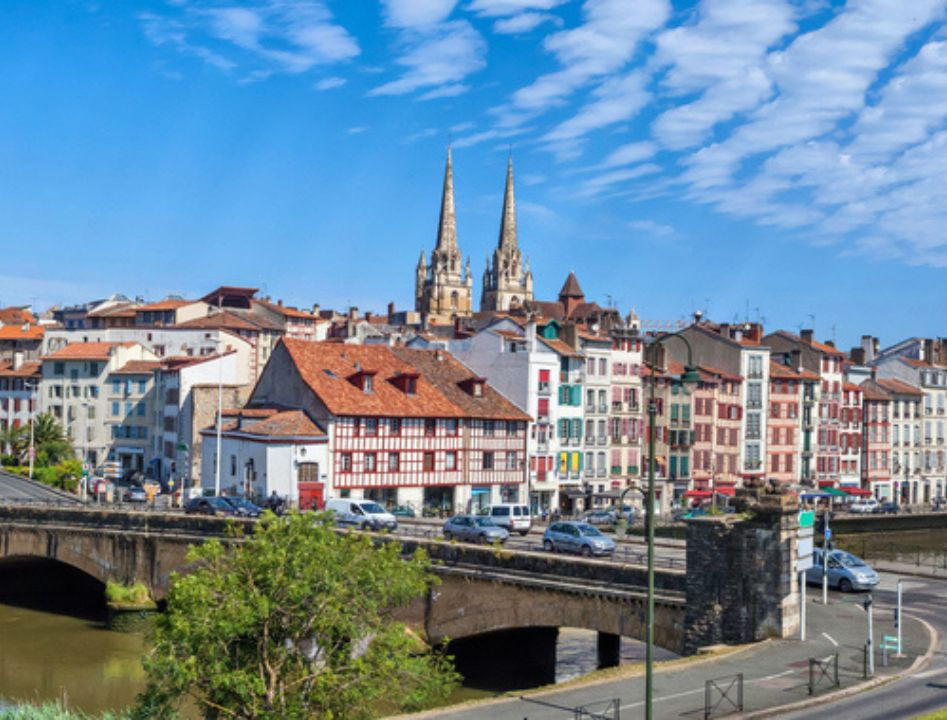
The River Nive divides Bayonne into its two beloved neighborhoods, each with a distinct personality. Grand Bayonne is the ancient, elegant heart of the city. Its pedestrianized medieval streets are lined with designer boutiques, artisan chocolatiers, and the kind of patisseries that make it very difficult to keep walking. This is where you’ll find the magnificent Cathédrale Sainte-Marie, a UNESCO World Heritage Site that has anchored the city’s skyline since the 13th century. Its soaring Gothic towers, medieval stained glass, and vast cloister — one of the largest in France — make it an absolute must-see.
Cross the river and you step into Petit Bayonne, the city’s younger, more spirited side. Colorful façades, vibrant street art, and buzzing riverside bars give this neighborhood an infectious energy. On Thursday afternoons, you can catch a game of pelota — the traditional Basque ball sport — at the trinquet, said to be the oldest pétanque court in France. Come evening, the streets fill with locals and travelers alike, sharing Basque specialties and glasses of local wine.
The Birthplace of French Chocolate (Yes, Really)
Here’s a delicious piece of history that most travelers don’t know: Bayonne is where chocolate first arrived in France. In the 17th century, Jewish artisans fleeing the Spanish Inquisition settled here and brought their knowledge of cacao with them. By the 19th century, the city boasted over 130 chocolate shops. That tradition is alive and thriving today.
A visit to the L’Atelier du Chocolat — part museum, part workshop, part shop — gives you an intimate look at the art of chocolate-making from bean to bar. And if you want to taste chocolate the truly old-fashioned way, make your way to Chocolat Cazenave, a chocolatier that has been operating since 1854. Their traditional hot chocolate, made by roasting their own beans and frothing the result into warm milk, is nothing short of extraordinary. This is slow travel at its most delicious.

Jambon de Bayonne and the Art of Eating Well
Bayonne is as famous for its cured ham as it is for its chocolate. Jambon de Bayonne — a delicate, salt-cured Basque ham with protected geographical status — is a regional icon you’ll find everywhere from market stalls to white-tablecloth restaurants. Every spring, the city celebrates its beloved ham with the Foire au Jambon de Bayonne, a lively festival that draws food lovers from across France and beyond.
For the full market experience, head to Les Halles de Bayonne, the covered market along the Nive, open Tuesday through Saturday. Here you’ll discover a wonderland of cured meats, aged cheeses, fresh seafood, gâteau Basque (a rich, buttery pastry filled with cream or cherry jam), and bottles of local wine. Saturday mornings, when outdoor vendors join the mix, are particularly magical — arrive early and let the morning unfold around you.
Wander, Linger, Explore: Bayonne at a Slow Pace
One of the great gifts of Bayonne is that it rewards slowness. A morning spent wandering the ramparts — ancient fortifications dating back to Roman times, reinforced by the legendary military architect Vauban in the 17th century — feels like walking through centuries of living history. The Jardin Botanique (Botanical Garden), designed in a Japanese style with a serene pond, wooden bridge, and cascading waterfall, is tucked just beside the cathedral walls and makes for a perfect midday retreat.
Art lovers will want to spend time at the Musée Bonnat-Helleu, which houses a quietly remarkable collection of works by El Greco, Goya, Rubens, Rembrandt, Manet, and Renoir — including one of the most significant collections of Spanish painting outside of Spain. The Musée Basque, set in a beautiful 16th-century mansion on the banks of the Nive, tells the layered, fascinating story of Basque culture, language, and traditions.
And when you’re ready to stretch your legs beyond the city, Biarritz is just 8 kilometers away by bus — a perfect afternoon escape to the sea before returning to Bayonne’s cozy riverside bars for an apéro at sunset.
When to Visit Bayonne
Bayonne is a wonderful destination year-round, but late spring through early autumn is particularly beautiful. If you want to experience the city at its most festive and electric, the Fêtes de Bayonne — one of the largest summer festivals in all of France, held each year in late July — draws nearly a million visitors with traditional Basque parades, live music, and celebrations that fill the streets day and night. For a quieter, more intimate visit, the shoulder seasons of April through June and September through October offer mild weather, fewer crowds, and the full magic of the city at your own pace.
Ready to Plan Your Basque Country Adventure?
Bayonne is exactly the kind of destination that’s best experienced with a thoughtfully crafted itinerary — one that leaves room for a second cup of Cazenave hot chocolate, a longer linger at the market, and an unhurried afternoon by the river. That’s where I come in.
I’d love to help you design a France itinerary that feels as magical as the destination itself. Schedule a consultation with me today, and let’s start planning the slow-travel escape you’ve been dreaming of.


Comments