
Armenia: Geography, History, and Travel Guide
Table of Contents
Where Armenia Is Located and What Makes It Unique
Armenia's History and Cultural Heritage
Population, Government, and Modern Society
Best Time to Visit Armenia
How Many Days in Armenia You'll Need
Planning Your Armenia Itinerary
Armenia Travel Safety and Practical Logistics
Why Work With a Travel Advisor for Your Armenia Trip
Last Updated: October 14, 2026
Where Armenia Is Located and What Makes It Unique
Armenia sits in the South Caucasus region, a mountainous area where Europe and Asia converge. This landlocked country is bordered by Georgia to the north, Azerbaijan to the east, Iran to the south, and Turkey to the west. The landscape defines the experience: dramatic peaks, deep valleys, and terrain that has shaped Armenian culture for millennia.
What makes Armenia distinct isn't just geography. This is one of the world's oldest Christian nations, with a faith woven into every aspect of daily life and visible in ancient stone monasteries perched on cliffsides. The Armenian Highlands dominate the terrain, creating a country where nearly every direction offers mountain vistas. For travelers, this means authentic experiences far removed from typical European tourist circuits.
At Enchanted Wanderings, we've found that Armenia appeals to travelers seeking something genuinely different. The country combines deep historical significance with manageable logistics and a warmth from locals that surprises first-time visitors. Unlike crowded European destinations, Armenia rewards curiosity with genuine discovery.

Armenia's History and Cultural Heritage
Armenia claims one of the world's longest continuous histories. The nation adopted Christianity in 301 AD, making it the first country to do so officially. This early conversion shaped everything that followed, from architecture to art to the identity of the Armenian people themselves.
The country's past includes periods of independence and periods under foreign rule, including time as a Soviet republic before gaining independence in 1991. This history created layers: ancient ruins sit beside Soviet-era buildings, and traditional villages exist alongside modern Yerevan, the capital. Understanding this context helps visitors appreciate what they see.
Armenian culture emphasizes family, tradition, and resilience. The language, Armenian, is unique and distinct from neighboring tongues. Traditional music, dance, and craftsmanship remain central to Armenian identity. Monasteries like Geghard and Khor Virap aren't just tourist sites, they're active spiritual centers where Armenian Christianity continues unbroken from centuries past.
Population, Government, and Modern Society
Armenia has a population of roughly 3 million people, with nearly half living in Yerevan. The capital serves as the cultural and economic heart, where ancient history meets contemporary life. Outside the city, smaller towns and villages preserve traditional ways.
The government operates as a republic with a parliamentary system. Armenia joined the Soviet Union in 1922 and declared independence in 1991, a transition that reshaped the nation's trajectory. Today, Armenia navigates complex regional relationships while building democratic institutions.
Modern Armenian society balances tradition with change. Younger generations increasingly pursue education and careers in technology and business, while family structures remain strong. The Armenian diaspora, millions of Armenians living abroad, maintains deep connections to the homeland, and many return to visit or invest. This creates a culture that honors the past while looking toward the future.
Best Time to Visit Armenia
The ideal time to visit Armenia is late spring through early fall, roughly May through October. Summer temperatures are warm and comfortable, ranging from the 70s to 80s Fahrenheit in most regions. This window offers the best combination of pleasant weather and accessible mountain roads.
Spring (April-May) brings wildflowers and mild temperatures, perfect for hiking and exploring monasteries. Fall (September-October) offers similar conditions with fewer crowds and stunning light. Winter (November-March) is cold and can close mountain passes, though Yerevan remains accessible and offers a quieter experience.
Late September and early October represent the sweet spot: warm days, cool nights, and the landscape still green. Rainfall is minimal during summer months, making this season ideal for outdoor exploration. If you're planning an Armenia itinerary that includes hiking or extensive monastery visits, these months maximize your options.
How Many Days in Armenia You'll Need
Most visitors need 5-7 days to experience Armenia meaningfully. Three days allows you to see Yerevan and visit one or two major monasteries, but leaves you feeling rushed. Five days lets you explore the capital, visit multiple historical sites, and experience village life or hiking.
Seven days is the optimal length for a first visit. This timeframe accommodates travel between regions, unhurried monastery visits, opportunities to interact with locals, and flexibility for unexpected discoveries. You can visit Yerevan, explore the Caucasus Mountains, and venture into regions like Gegharkunik or Lori without feeling pressured.
For serious hikers or those interested in deep cultural immersion, 10 days opens possibilities for multi-day treks and extended stays in smaller towns. Group travelers coordinating multiple family members benefit from this extra time, as it reduces logistical stress and allows for meaningful experiences rather than just checking boxes.
Planning Your Armenia Itinerary
An effective Armenia itinerary balances Yerevan's urban energy with the country's spiritual and natural heritage, and the single biggest planning mistake is treating Armenia as a series of day trips from the capital. The country is compact, roughly the size of Maryland, but mountain roads make travel times longer than the map suggests.
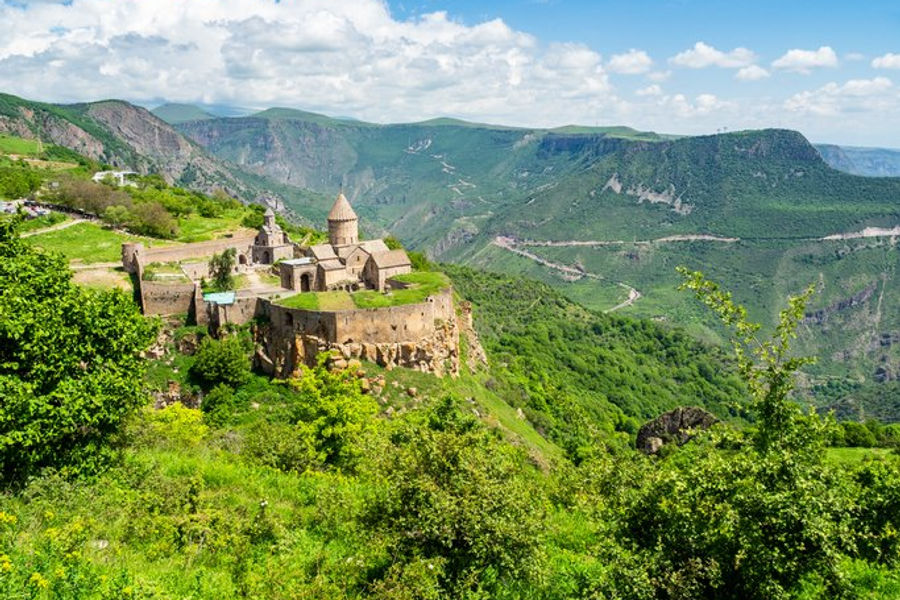
A classic first-visit route runs seven to eight days and moves in a loose loop. Start with two days in Yerevan, then take a day trip east to Garni Temple, Armenia’s only standing Greco-Roman temple, and Geghard Monastery, partially carved into the surrounding cliffs. Head north to Lake Sevan for a night, where Sevanavank Monastery overlooks one of the largest high-altitude lakes in the world. From there, cross the mountains south to Vayots Dzor for wine tasting in Areni and a visit to Noravank Monastery, framed by red rock cliffs. Continue to Goris or Tatev for a night, riding the Wings of Tatev aerial tramway, one of the longest reversible cable cars in the world (Longest non-stop double-track cable car), to reach the monastery. Return to Yerevan by way of Khor Virap for the classic view of Mount Ararat.
A second, less-traveled loop covers the north. Base in Dilijan for forest hikes and the medieval monasteries of Haghartsin and Goshavank, then push to Lori and the cliffside monasteries of Haghpat and Sanahin, both UNESCO World Heritage Sites.
For hikers, add two to three days in the Gegharkunik or Vayots Dzor regions. Day hikes around Mount Aragats, the country's highest peak, and multi-day treks in the Caucasus foothills are best in July through September, when snow has cleared from the higher passes.
The rhythm matters more than the checklist. A monastery deserves an hour of quiet exploration, not a fifteen-minute photo stop, and a village visit gains meaning when you sit with locals over coffee. Build in buffer time for mountain roads, and resist the urge to schedule every hour.
We at Enchanted Wanderings help clients design Armenia itineraries that match their interests and pace. Whether you're drawn to ancient Christianity, mountain hiking, culinary experiences, or a mix of everything, the right itinerary transforms a trip from sightseeing into genuine discovery.
Armenia Travel Safety and Practical Logistics
Armenia is generally safe for tourists. Violent crime against visitors is rare, and locals are accustomed to and welcoming of travelers. Standard precautions apply: avoid displaying expensive items, stay aware of your surroundings in crowded areas like Yerevan's Vernissage market, and use registered taxis or ride-hailing apps rather than hailing cabs on the street.
The one safety topic that requires real attention is the border situation. Armenia and Azerbaijan have a long-standing dispute over Nagorno-Karabakh and their shared border, and tensions can flare without much warning. The practical rule for visitors is simple: stay away from the Armenia-Azerbaijan border zone and from any area near the Nakhchivan exclave.
Watch Out Border conditions can shift quickly. Confirm the current advisory and any regional restrictions shortly before departure, and avoid the Armenia-Azerbaijan border zone and the area near Nakhchivan.
Practical logistics are straightforward once you know the basics. The Armenian dram is the local currency, and while U.S. dollars are accepted in some tourist areas, you will get better rates and fewer surprises by using drams for everyday purchases. ATMs are widely available in Yerevan and larger towns, but carry some cash for villages, small guesthouses, and rural taxi drivers, where card readers are uncommon. Credit cards work at hotels and restaurants in the capital but less reliably outside it.
Connectivity is good in Yerevan and most towns. Local SIM cards are inexpensive and easy to buy at the airport or in the city, and they give you reliable mobile data for maps and translation. Wi-Fi is common in hotels and cafes. The official language is Armenian, with Russian also widely understood among older generations, but English is increasingly common among younger people and in the tourism sector.
Transportation within Armenia is affordable. Marshrutka shared minibuses connect towns and are the cheapest option, though they run on fixed schedules and can be crowded. Private drivers, arranged through your hotel or a travel advisor, offer far more flexibility for reaching monasteries and mountain sites. Roads vary in quality, and mountain routes can be slow and winding.
Practical Element | Details |
Currency | Armenian dram (AMD); USD accepted in some tourist areas |
Payments | Cards common in Yerevan; carry cash for villages and rural areas |
Language | Armenian; Russian widely understood; English common in tourism |
Connectivity | Inexpensive local SIM cards; Wi-Fi common in hotels and cafes |
Transportation | Marshrutka, private drivers, or rental cars |
Best Months | May-October |
Visa | U.S. citizens receive a visa on arrival or an e-visa |
Safety | Generally safe; avoid the Armenia-Azerbaijan border zone and Nakhchivan area |
Seasonal considerations matter for logistics as much as for weather. Winter can close mountain passes, particularly the routes to Tatev and the higher northern roads, so build flexibility into any cold-weather trip. Summer is the most reliable season for reaching remote monasteries and trailheads, but it is also the busiest, so book drivers and guesthouses ahead. Spring and fall offer the best balance of open roads, comfortable temperatures, and lighter crowds.

Why Work With a Travel Advisor for Your Armenia Trip
Planning an Armenia trip independently is possible, but a travel advisor transforms the experience. The difference isn't just convenience, it's access to insights that guidebooks and blogs don't capture.
A good travel advisor knows which monasteries reward quiet morning visits before tour groups arrive. They understand which villages offer authentic interactions versus those geared entirely toward tourists. They've navigated logistics like booking drivers, arranging monastery access, and timing travel to avoid crowds.
For families coordinating across multiple states and budgets, an advisor manages complexity that dissolves stress. For first-time international travelers, an advisor provides confidence and on-call support if flights change or unexpected issues arise.
At Enchanted Wanderings, we specialize in exactly this kind of custom travel planning. Erin Baker has visited 90 countries across 7 continents and brings that experience to every Armenia itinerary we design. We handle research, logistics, and on-call support during your trip. We know which accommodations deliver authentic experiences without tourist-trap pricing.
The real value emerges when something unexpected happens mid-trip. A flight cancels in Istanbul. A monastery closes unexpectedly. Weather forces a change of plans. When you've booked everything yourself, you're problem-solving alone at midnight in a foreign country. When you work with us, you call your advisor, and we solve it together.
Planning an Armenia trip involves balancing history, landscape, logistics, and the unpredictable nature of international travel. The country rewards preparation with authenticity and discovery.
At Enchanted Wanderings, we transform the overwhelming process of Armenia travel planning into a seamless, stress-free experience. We handle research, coordinate logistics, and provide on-call support before, during, and after your trip. Book a free consultation with us to discuss your Armenia travel vision and discover how we can make it real.


Comments